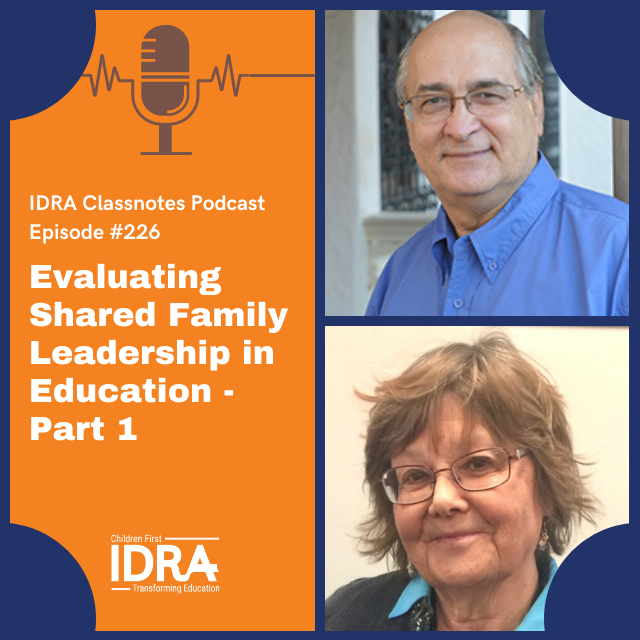
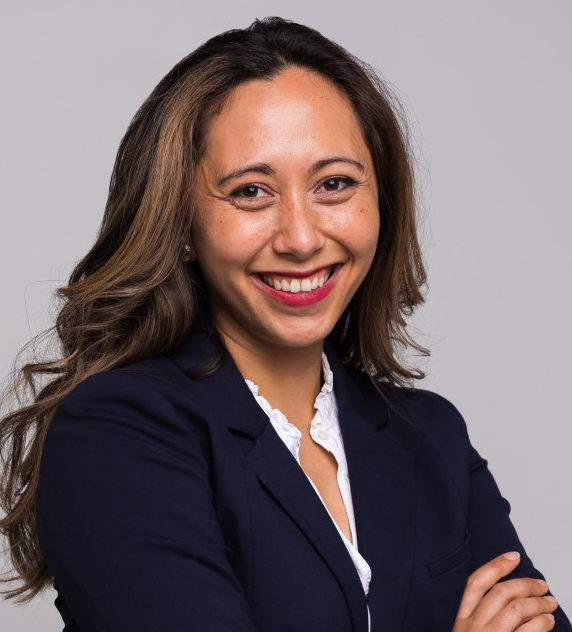
(August 23, 2010) Parent and community involvement in schools has too often been led by so-called experts imparting their knowledge or even sometimes preaching at an audience. Other times, there is worry that talking in-depth about education in a particular school is either too complicated for non-educators or that the conversation will turn adversarial. This summer, IDRA held an event in the Rio Grande Valley that brought together more than 140 cross-sector education stakeholders, including families, community organization leaders, public school educators, students, foundation representatives and public officials. Aurelio M. Montemayor, M.Ed., director of the IDRA Texas Parent Information and Resource Center, tells how participants at the ¡YA! Es Tiempo event demonstrated how people in different sectors of a community can come together to talk meaningfully about education and create strategies for improving their own neighborhood public schools to ensure all students graduate ready for college and career. Aurelio is interviewed by Laurie Posner, MPA, an IDRA education associate. Send comments to podcast@idra.org or fill out form online at www.idra.org/Podcasts. Sign up to receive free e-mail notices when new episodes are available.
College for All – Espisode 75
(August 3, 2010) Nilka Avilés, Ed.D. tells about an effort that built relationships between high schools and a local university to remove barriers of school-level low expectations, student academic preparation and college-level instruction.
High School Youth Tekies on College Access – Episode 74
(June 16, 2010) Aurelio Montemayor, M.Ed., director of the IDRA Texas Parent Information and
Resource
Center , interviews four high school students about how they engaged with 600 of their peers to help them apply for college.
Supporting Parents of Preschoolers – Episode 73
(May 25, 2010) Frances Guzmán, M.Ed., an IDRA education associate, describes how HIPPY (Home Instruction for Parents of Preschool Youngsters) prepares young children for the classroom and strengthens connections between parents and their children’s school.
Parents as Leaders in Education – Episode 72
(May 14, 2010) Frances Guzmán, M.Ed., an IDRA education associate, shares examples of this parent leadership in action from IDRA’s recent parent institute, where groups of parents from several school districts led sessions for each other on multiple education topics.
Learning and Mentoring with Teachers and Students – Episode 71
(April 30, 2010)
Aurelio Montemayor, M.Ed., director of the IDRA Texas Parent Information and
Resource
Center, describes how IDRA successfully combined a professional learning community of middle school content teachers with mentoring of students at risk of dropping out.
Youth, Technology and College Access – Episode 70
(April 12, 2010) Hector Bojorquez, an IDRA education associate, shares an inspiring story of a group of high school students took leadership in helping their peers access to college information through community technology centers in
San Antonio.
Youth as Technology Bridges – Episode 69
(March 29, 2010) Hector Bojorquez, an IDRA education associate, tells the story of how two youth groups in south
Texas overcame obstacles in their distressed communities by providing leadership and technology expertise for parents and community members.
Implications of Inequitable School Funding – Episode 68
(March 12, 2010) Encarnación Garza, Jr., assistant professor at UTSA, shares his perspective of inequitable school funding as an issue of social justice through the eyes of a former school principal and superintendent.
Using Social Media to Build Better Schools – Episode 67
(February 26, 2010) Laurie Posner, MPA, an IDRA education associate, and
Christie Goodman , APR, IDRA’s communications manager, talk about how the dramatic growth of social media presents a great opportunity for schools and families to engage with each other in powerful ways and particularly to provide access to those who have been historically left out of school conversations.
What Parents Should Know about Their Schools – Episode 66
(February 17, 2010) IDRA senior education associate, Rogelio López del Bosque, Ed.D., lists four questions he asks parents to explore to move from the theoretical to the practical work of supporting their school’s teaching and learning.
Reflections on Bilingual Education Today and Beyond – Episode 65
(January 29, 2010) IDRA senior education associate, Adela Solís Ph.D., provides an overview of bilingual education and dual language programs and discusses what we need to be doing in the future to effectively serve English language learners.
Latino and
African-American
Communities
Leading
School Reform – Episode 64 (January 20. 2010) Rosana Rodríguez, Ph.D., director of development at IDRA, and Bradley Scott, Ph.D., director of the IDRA South Central Collaborative for Equity, discuss an online launch kit that IDRA is developing to help communities take on a process of local cross-sector, multicultural dialogue and action to improve their own neighborhood public schools for all children.
Continuities with Lessons in Dropout Prevention – Episode 63
(December 17, 2009) IDRA president and CEO, María “Cuca” Robledo Montecel, Ph.D., describes how seven lessons presented in IDRA’s new publication, Continuities – Lessons for the Future of Education from the IDRA Coca-Cola Valued Youth Program, can serve as a guide and catalyst for future actions to transform education in this country.
Counting Dropouts – Episode 62
(November 24, 2009) Roy L. Johnson, M.S., director of Support Services at IDRA and author of the study for a number of years, discusses why counting dropouts is important and how the data can be used to strengthen school holding power.
Reflective Teaching – Episode 61
(November 13, 2009) Kristin Grayson, M.Ed., an IDRA education associate, describes her working in coaching teachers through the process of reflective teaching where teachers reflect on a particular lesson from the perspective of how well the students were engaged.
School Accountability to Poor Families – Episode 60
(October 16, 2009) As IDRA prepares to release its latest study of high school attrition in Texas , Aurelio Montemayor , M.Ed., director of the IDRA Texas Parent Information and Resource Center , talks about how parents can work together to hold their school accountable and to examine the big picture of how well their children’s school is doing for all students.
Professional Development for Secondary Math Teachers – Episode 59
(September 29, 2009) Jack Dieckmann, Ph.D., a former senior math education specialist at IDRA and current doctoral student at Stanford, discusses how teacher training needs to validate teacher experience and address multiple dimensions like content and language development.
The Teacher as a Culturally Proficient Coach – Episode 58
(September 18, 2009) Adela Solís, Ph.D., and IDRA senior education associate, describes IDRA’s unique model of training teacher mentors that incorporates principles of cultural proficiency with cognitive coaching.
Helping Schools Address Issues of Race – Episode 57
(August 24, 2009) Bradley Scott, Ph.D., director of the IDRA South Central Collaborative for Equity, describes the kinds of support that the federally-funded equity assistance centers provide to help school leaders and communities address issues of race in order to ensure that all of their students have an equal opportunity for academic achievement.
The Family Friendly Principal – Episode 56
(July 20, 2009) Dr. Rogelio López del Bosque discusses how he created a family friendly school during his recent five-year term as a high school principal in order to bring families into the conversation of creating a school that achieved success for all students.
Family Friendly at the School Door – Episode 55
(June 9, 2009) Aurelio Montemayor , M.Ed., director of the IDRA Texas Parent Information and Resource Center, talks about his customer service training with a school district that began by validating all staff positions as important to the success of students and extended to staff members building ways to support each other in actively welcoming families and communities.
Student Voices on Being Valued – Episode 54
(May 14, 2009) Following a national essay contest among tutors in the Coca-Cola Valued Youth Program, Linda Cantu, Ph.D., director of this dropout prevention program, shares examples of student’s stories of how the program helped them do better in school and how they had helped their tutees to do better.
School Change Strategies – Episode 53
(April 27, 2009) In the third of a set of podcast episodes on this topic, IDRA president and CEO, María “Cuca” Robledo Montecel, Ph.D., describes how IDRA’s Quality School Action Framework indentifies three strategies for changing schools: capacity of the community to influence schools, building coalitions, and building the capacity of the schools themselves.
Fundamentals for School Change – Episode 52
(April 7, 2009) In the second of a set of podcast episodes on this topic, IDRA president and CEO, María “Cuca” Robledo Montecel, Ph.D., describes the two school change fundamentals of governance efficacy and funding equity in the Quality School Action Framework that are required for school success.
Student Engagement and the Language of the Mathematics Class – Episode 51
(March 26, 2009) Jack Dieckmann, M.A., a former senior math education specialist at IDRA and current doctoral student at Stanford, describes the importance of using the language of the student and allowing for messy talk to help their students make meaning of math concepts
Busting Myths About Children of Poverty – Episode 50
(March 12, 2009) In this 50th episode, Bradley Scott, Ph.D., director of the IDRA South Central Collaborative for Equity, and Aurelio Montemayor, M.Ed., directs the IDRA Texas Parent Information and
Resource
Center , discuss these about children of poverty myths, how they fail to recognize the strengths that students bring and how they lead to inequitable and unsuccessful education.
The Civil Rights Impact of Response to Intervention – Episode 49
(February 27, 2009) Bradley Scott , Ph.D., director of the IDRA South Central Collaborative for Equity, describes 11 equity conditions the national network of equity assistance centers believe must be in place for Response to Intervention to be successful.
Properly Serving Secondary English Language Learners – Episode 48
(February 13, 2009) Abelardo Villarreal, Ph.D., director of IDRA field services and a national expert on education of English language learners, describes what schools need to do to ensure that ELLs receive educational services that meet the quality and equity standards in order to graduate prepared for college and work.
Building Critical Thought through Children’s Literature – Episode 47
(February 2, 2009) Dr. Juanita García, an education associate at IDRA, describes how she uses children’s literature to encourage students to read deeply, analyze, question and make associations with the stories.
Broadening the Conversation with Parents about Mathematics – Episode 46
(January 16, 2009)
Jack Dieckmann , M.A., a former senior math education specialist at IDRA and current doctoral student at Stanford under Dr. Linda Darling Hammond, how teachers can converse with parents as peers even though they may have no knowledge of math instruction.
What Students Need their School Counselors to Hear – Episode 45
(December 18, 2008) Josie Danini Cortez, M.A., an IDRA senior education associate, highlights findings from IDRA research about what students need from their school counselors to help them get into and pay for college.
Beyond the Worksheet in the Science Classroom – Episode 44
(November 21, 2008) Veronica Betancourt , M.A., an IDRA education associate and developer of IDRA’s Science Smart! model, describes the purposes of using worksheets in the classrooms and engaging alternatives to their overuse.
Families and Teachers Communicating – Episode 43
(November 7, 2008)After recently serving as a high school principal for five years, Dr. Rogelio López del Bosque shares how he created a culture of engagement among teachers and parents that welcomed and even expected dialog for student success.
Action for School Change – Episode 42
(October 21, 2008) With schools losing one-third of their students on average, dropout prevention programs, even the most effective ones, cannot solve the persistent large scale problem we face. In the first of a set of podcast episodes on this topic, IDRA president and CEO, María “Cuca” Robledo Montecel, Ph.D.,describes the four elements in the Quality School Action Framework that must be in place for schools to be successful.
College Access for Low-Income and Minority Students – Episode 41
(October 14, 2008) Aurelio Montemayor, M.Ed., director of the IDRA Texas Parent Information and
Resource
Center , gives examples of how K-12 schools can actively support college access for their students.
Fostering Student Questions – Episode 40
(September 15, 2008) Dr. Juanita García, an education associate at IDRA, discusses ways to foster student questions and describes a specific group memory strategy teachers can use right away.
Supporting First Year Teachers – Episode 39
(September 2, 2008) Dr. Adela Solís, an IDRA senior education associate, gives practical examples of ways schools can support their new teachers and of strategies for new teachers during their first days with their students.
Effective Parent Outreach – Episode 38
(July 23, 2008) Aurelio Montemayor, M.Ed., director of the IDRA Texas Parent Information and
Resource
Center , describes a new model for building a network of parent leaders and how it can transform the school-parent connection.
Gender Equity at 36 – Episode 37
(July 9, 2008) Bradley Scott , Ph.D., director of the IDRA South Central Collaborative for Equity, discusses where we are now in terms of the advancement of girls as well as gender equity challenges affecting boys today and what the school’s responsibility is under the law.
Transformational Teaching in Math – Episode 36
(June 18, 2008) Kathryn Brown, an IDRA education associate and developer of IDRA’s Math Smart! model, describes how teachers are building on what they know to transform their teaching to better guide and empower student mathematical thinking.
Communities Using Data to Improve their Schools – Episode 35
(June 3, 2008) Anna Alicia Romero and
Hector Bojorquez describe components of IDRA’s School Holding Power Portal, challenges families and others face in accessing useful data, and how communities are using data to improve their schools.
Teaching Opportunities through Discovery in Science – Episode 34
(May 19, 2008) Veronica Betancourt, M.A., an IDRA education associate and developer of IDRA’s Science Smart! model, discusses how letting students of all ages facilitate their own learning through discovery to make science more meaningful to them.
Student and Parent Math Conversations – Episode 33
(April 29, 2008) Aurelio Montemayor, M.Ed., director of the IDRA Texas Parent Information and
Resource
Center , shares how students who have not been succeeding in math have opened a powerful collaborative dialog with parents and educators.
Latino Parent Engagement in High School Math – Episode 31
(April 3, 2008) Aurelio Montemayor, M.Ed., director of the IDRA Texas Parent Information and
Resource
Center , tells the story of how a group of parents is affecting student success in math education.
Creating Leadership Opportunities for Students - Episode 30
(March 13, 2008) As his school’s teacher coordinator for the Coca-Cola Valued Youth Program, Jerry de la Garza discusses how giving leadership opportunities to students who are considered at risk of dropping out leads to great transformations.
Six Goals of Educational Equity - Episode 29
(February 29, 2008) Bradley Scott, Ph.D., director of the IDRA South Central Collaborative for Equity, gives an overview of the Six Goals of Educational Equity and discusses how school personnel and communities can use them as a yardstick to measure their progress and as a lightening rod to galvanize change.
Court Ruling on Compliance with NCLB Mandates - Episode 28
(February 15, 2008) IDRA’s school policy director, Dr. Albert Cortez, gives an overview of the recent NCLB-focused court ruling and its implications for states, school districts as well as for NCLB reauthorization.
Leading a Diverse Campus to Success - Episode 27
(January 25, 2008) Elementary principal, Sandy Dolan, shares how she has transformed her campus to succeed during a time of dramatic population changes.
Dropout Prevention for Students with Special Needs - Episode 26
(December 11, 2007) Josie Danini Cortez, M.A., and Lee Ramos talk about the dramatic impact of a pilot project that adapted the Coca-Cola Valued Youth Program to serve students with special needs.
Professional Learning Communities in Schools - Episode 25
(November 26, 2007) Josie Danini Cortez, M.A., and Dr. Juanita García join Aurelio Montemayor, M.Ed., to describe a successful professional learning community in a middle school in south Texas.
Coaching and Mentoring New Teachers - Episode 24
(November 9, 2007) Dr. Linda Cantu and Dr. Adela Solís, developers of IDRA’s coaching and mentoring model, discuss how coaching and mentoring programs can give new teachers the peer support and trusted advice they need to succeed from day one.
The Watch on Racism Cannot Stop - Episode 23
(October 26, 2007) Dr. Shirley Nash Weber, former chair of the Department of Africana Studies and Professor of Africana Studies at San Diego State University, presents a keynote on the challenge African American women face in balancing gender and equity.
Science is a Key to Life - Episode 22
(October 15, 2007) Veronica Betancourt, M.A., an IDRA education associate and developer of IDRA’s Science Smart! model, discusses how minor tweaks in teaching practices can open giant doors for students, particularly for girls, minority students and English language learners.
Engaging Parents in Education - Episode 21 (September 28, 2007) Aurelio Montemayor, M.Ed., director of the IDRA Texas Parent Information and Resource Center, describes how a new guide from the U.S. Department Education can provide ideas and specific strategies for engaging parents in schools.
Science in Early Childhood Bilingual Classrooms - Episode 20
(September 14, 2007) Dr. Rosalinda Barrera, dean of the College of Education at Texas State University in San Marcos, draws a vivid picture of the need for schools to actively integrate science instruction into the earliest grades for second language learners.
Fostering Student Engagement English Language Learners - Episode 19
(August 29, 2007) Kristin Grayson, M.Ed., an IDRA education associate outlines the engagement-based sheltered instruction model that she developed at IDRA that is helping teachers learn, reflect and adapt instructional strategies so that all their students are engaged and learning the content and academic language.
Access to Higher Levels of Mathematics - Episode 13
(May 30, 2007) Kathryn Brown, an IDRA education associate and developer of IDRA’s Math Smart! model, discusses how all students should have access to quality instruction in math that ensures success on all assessments, and enrollment and completion in higher-level mathematics courses.
Reflections from Early Childhood Institute Attendees - Episode 12 (May 18, 2007) Three participants at the Annual IDRA La Semana del Niño Early Childhood Educators Institute talk about their experience there, what is happening at their schools and what they learned at the institute that will help them.
The Need for Cross-Race, Cross-Sector Dialogues - Episode 6
(January 24, 2007) Learn how this cross-sector and multiracial dialogue approach is creating lasting partnerships between African american and Latino communities, using education as common ground for collaboration. Dr.Rosana Rodríguez and Frances Guzmán join Dr. Bradley Scott, director of the IDRA South Central Collaborative for Equity, in this conversation.
The Power of IDRA’s Parent Leadership Model - Episode 3 (November 10, 2006) Aurelio Montemayor, M.Ed., describes the four dimensions of the IDRA’s model for parent engagement and how it can unleash powerful transformations for school success.
Using the New High School Allotment in Texas - Episode 2 (October 26, 2006) Dr. Albert Cortez, director of IDRA’s Institute for Policy and Leadership, is outlines ways the new high school allotment can strengthen your school’s holding power, the importance of measuring results and opportunities the new funds present.
Increasing School Holding Power for All Students
(Dec. 9, 2005) Dr. María "Cuca" Robledo Montecel, executive director IDRA led this teleseminar, hosted by the National Dropout Prevention Center for Students with Disabilities, on how communities and schools can work together, which school factors are key to student success based on research and IDRA experience, and an example of the power of shifting from a deficit view to one of valuing youth. More